Exhumed for Our Pleasure: What We're Really Doing When We Watch Dead Franchises Walk Again
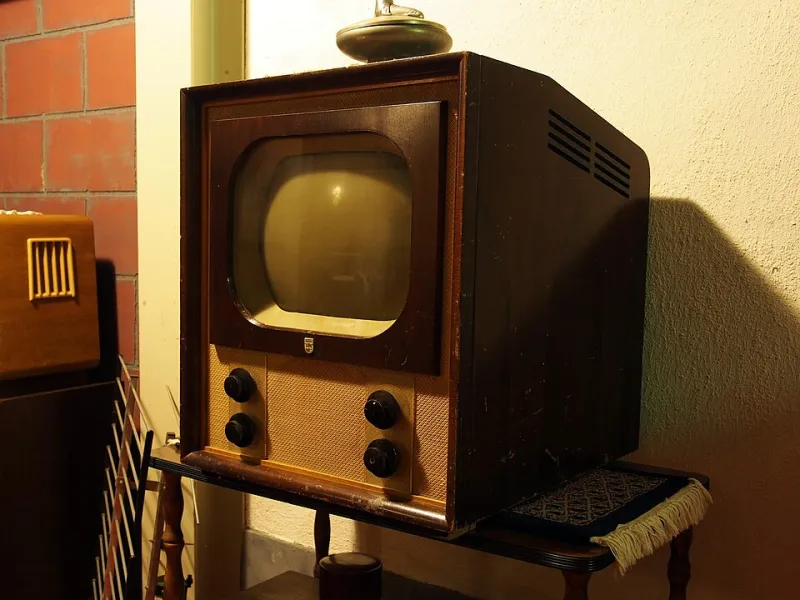
Photo: Alf van Beem, CC0, via Wikimedia Commons
There is a particular ritual that has become central to the American streaming experience, one that platforms have learned to monetize with surgical precision. A beloved series ends — sometimes abruptly, sometimes gracefully — and years later, it returns. The announcement arrives with fanfare. The original cast is photographed looking slightly older. The trailer deploys the original score. And audiences, who know better, subscribe anyway.
This is not resurrection. It is something far more psychologically complicated, and far darker.
The Graveyard With Good Lighting
Legacy revivals — the term the industry prefers — have become one of streaming's most reliable content strategies. Arrested Development returned on Netflix. Gilmore Girls came back for a four-episode farewell that functioned less like a celebration and more like an estate sale. Dexter was exhumed for New Blood, a concluding chapter that many viewers approached not with excitement but with something closer to grim obligation. And Just Like That... did not so much continue Sex and the City as it autopsied it in real time.
What is remarkable is not that these revivals exist. Commerce has always found ways to extract value from nostalgia. What is remarkable is the emotional posture audiences adopt when they engage with them. There is a widespread awareness, openly discussed in comment sections and podcasts and group chats, that these projects are unlikely to honor what came before. And yet viewership follows. Not despite the doubt, but in some meaningful sense, because of it.
Grief That Never Found a Proper Ending
Psychologists who study parasocial relationships — the one-sided emotional bonds audiences form with fictional characters — have noted that the conclusion of a beloved series can produce genuine grief responses. The loss is not metaphorical. For viewers who spent years investing in a narrative world, its ending represents the closure of something that functioned as community, comfort, and meaning-making.
But closures, even satisfying ones, are rarely complete. And unsatisfying closures — or no closure at all, in the case of cancellations — leave something unresolved in the audience's emotional architecture. The revival, then, offers not a continuation of the story but a second attempt at saying goodbye.
This is why so many legacy revivals feel funereal even when they are ostensibly triumphant. Audiences are not watching to discover what happens next. They are watching to be released from something they never quite let go of.
The Platform as Mortician
Streaming services have become extraordinarily skilled at identifying this unresolved grief and converting it into subscription events. The calculation is not cynical in any simple sense — there is genuine creative ambition behind many of these projects. But the business logic is unmistakable: a dormant franchise carries a built-in audience already emotionally activated, already primed to engage, already willing to pay.
What the platform offers is not new storytelling. It is the appearance of closure dressed in familiar aesthetics. The original music cues. The returning cast members. The callbacks to moments that once meant something. These elements do not advance a narrative. They provide the sensation of narrative completion without requiring the difficult work of actually earning it.
This is the mortician's art applied to intellectual property: making the deceased presentable, giving mourners something to look at, allowing grief to perform itself in a structured setting before everyone goes home.
Why We Keep Attending
The more uncomfortable question is what this pattern reveals about the audiences who participate in it. There is a self-awareness embedded in how Americans consume these revivals that deserves examination. The ironic viewership — the live-tweeting of disappointment, the pre-emptive obituaries written before a single episode airs — suggests that audiences have internalized the dynamic even as they perpetuate it.
To watch a legacy revival knowing it will probably fail, and to watch it anyway, is to engage in a form of controlled mourning. The viewer sets expectations low enough that any genuine surprise becomes a gift, and any confirmation of mediocrity becomes a validation of their sophisticated skepticism. Either way, the emotional need is served. Either way, the subscription is paid.
There is something almost liturgical about the process. The franchise is the sacred text. The revival is the ceremony. The audience is the congregation, gathering not because they believe in the miracle but because the gathering itself is the point.
The Cost of Staying in the Room
What these revivals rarely account for — and what audiences rarely permit themselves to fully confront — is the cost of the transaction. Every hour spent watching a diminished version of something once loved is an hour spent revising a memory. The original work does not exist in a vacuum. It exists in the viewer's mind, and the revival enters that space and rearranges things.
Dexter: New Blood did not simply add a chapter to a flawed series. For many viewers, it retroactively changed the emotional meaning of the original run, forcing a reconsideration of what they had loved and why. The closure it offered was purchased at the price of the ambiguity that had made the character interesting in the first place.
This is the transaction streaming platforms do not advertise. You will receive an ending. You may not recognize what you surrendered to get it.
What We're Actually Burying
Legacy revivals, at their most honest, are not about the franchises they claim to continue. They are about the viewers those franchises once belonged to — younger versions of ourselves who watched in different circumstances, with different people, in different emotional states. The desire to return is not really a desire to see what happens to the characters. It is a desire to return to the person we were when we first cared about them.
Streaming platforms cannot deliver that. No narrative can. But they can simulate the attempt, and in that simulation, something real does happen: we are reminded, with uncomfortable clarity, that the past is genuinely past, that the people we were are gone, and that the stories we loved were already complete.
We just needed to watch them end again to believe it.