The Aesthetics of Honesty: How Prestige Television Learned to Perform Truth Without Telling It

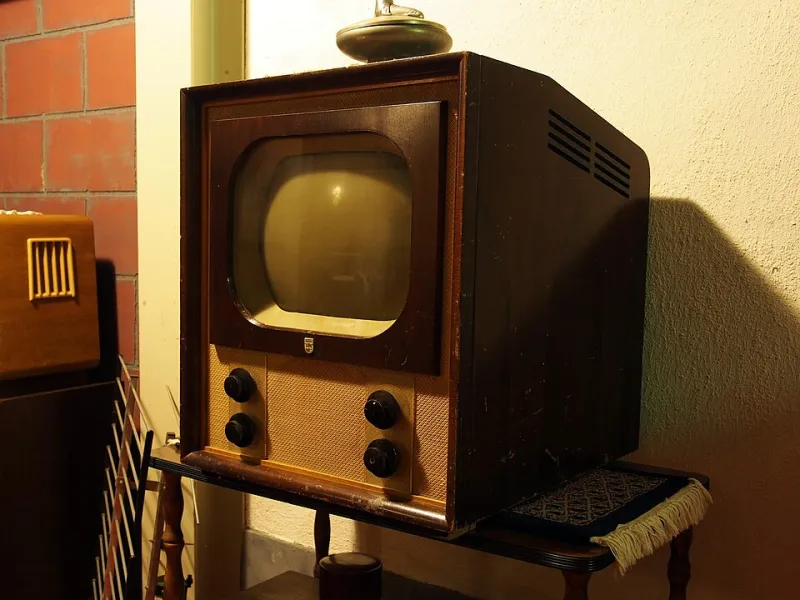
Photo: Solkoll, Public domain, via Wikimedia Commons
There is a particular kind of praise that accumulates around the most celebrated American television dramas of the last fifteen years, and it tends to cluster around a specific vocabulary. Unflinching. Uncompromising. Brutally honest. Raw. These words appear in reviews of The Wire, Euphoria, The Bear, Succession, Severance, and dozens of others. They are meant as the highest compliments the critical apparatus can offer. They are also, on examination, almost entirely aesthetic observations dressed as moral ones.
What these shows share is not, in most cases, a more truthful engagement with human experience than their predecessors. What they share is a more convincing performance of such engagement. And the distinction matters enormously — not because prestige television is fraudulent, but because the confusion between aesthetic roughness and moral honesty has consequences for how we understand what we're watching and what we're asking stories to do.
The Visual Grammar of Realness
The production choices that signal authenticity in contemporary prestige drama are remarkably consistent. Handheld camera work that introduces instability into the frame. Natural lighting that flattens skin and muddies backgrounds. Overlapping dialogue in which characters speak past each other rather than in the clean exchanges of traditional dramatic convention. Narrative arcs that refuse resolution, ending episodes mid-thought, mid-argument, mid-crisis.
These choices did not arrive organically. They were developed — in independent film, in international cinema, in the Dogme 95 movement — as genuine formal experiments in representing unmediated experience. By the time they migrated into American prestige television, they had accumulated enormous critical prestige. To deploy them was to signal membership in a tradition of serious artistic intent.
But a technique borrowed from a tradition is not the same as the values that generated it. The handheld camera that Lars von Trier used to destabilize bourgeois comfort performs a different function when it appears in a streaming drama engineered to win awards and retain subscribers. The grammar remains. The intent has been renegotiated.
Messiness as Brand Identity
The Bear is perhaps the most instructive recent example. The series — set in a Chicago restaurant kitchen and following a grief-stricken chef attempting to salvage his late brother's business — received near-universal critical acclaim, much of it centered on its formal intensity: the rapid editing, the claustrophobic framing, the sustained chaos of its kitchen sequences. Reviewers described it as visceral, authentic, honest.
It is also a meticulously constructed piece of television, produced with considerable resources, cast with skilled actors, and edited with extraordinary precision to create the sensation of chaos rather than chaos itself. The difference is not a flaw. It is the nature of the medium. But the critical language applied to the show — language that praised its authenticity as though it were a documentary rather than a drama — reveals how thoroughly audiences have been trained to mistake craft for confession.
The messiness of prestige television is a design choice. Its refusal of resolution is a narrative strategy. Its ugliness is lit and graded and mixed by professionals whose job is to make ugliness look exactly right.
What We Mean When We Say "Unflinching"
The word unflinching deserves particular scrutiny. It implies that the storyteller has looked directly at something difficult and refused to look away — that the audience is receiving an unmediated encounter with darkness. But every creative decision in a prestige drama is a form of direction. The camera is pointed somewhere and away from somewhere else. The scene ends at a particular moment. The character's interiority is revealed in particular ways and withheld in others.
Shows that are praised for being unflinching are often, in practice, extraordinarily selective about what they choose not to flinch at. Euphoria depicts adolescent drug use with visual lushness that aestheticizes devastation even as it documents it. Succession renders its characters' cruelty with such wit and elegance that the audience's enjoyment of their behavior is never seriously threatened. The unflinching gaze is always curated. What varies is how well the curation is concealed.
This is not an indictment. It is a description of how narrative art functions. The problem arises when the concealment is so successful that audiences stop recognizing it — when the aesthetic of honesty is accepted as honesty itself.
The Moral Comfort of Aesthetic Difficulty
There is a specific psychological satisfaction that prestige drama's performance of authenticity provides, and it is worth naming directly. When a viewer watches a show that signals seriousness through formal difficulty — that demands attention, that withholds easy resolution, that depicts suffering without sentimentalizing it — the viewer is implicitly flattered. Watching this show, the experience suggests, is itself an act of moral engagement. You are not consuming escapism. You are confronting reality.
This flattery is the prestige drama's most effective mechanism. It allows audiences to experience the pleasures of sophisticated entertainment while believing they are doing something more substantial. The subscription to a streaming platform becomes an act of cultural seriousness. The hours spent watching become something closer to study.
What this framing obscures is that the suffering depicted — even when it is drawn from real experience, even when it is rendered with genuine care — has been processed and packaged for consumption. The darkness in prestige television is not the same darkness that exists outside it. It has been made habitable, given shape, assigned meaning. That process is valuable. But it is not the same as encountering unmediated truth, and mistaking one for the other prevents us from asking what the stories are actually doing with the difficulty they claim to document.
The Question Behind the Praise
When a show is praised for being unflinching, the question worth asking is: unflinching toward what, exactly, and toward whom? Prestige drama is extraordinarily brave about certain categories of darkness — addiction, grief, familial dysfunction, institutional corruption — and remarkably reluctant about others. The darkness it depicts tends to be the darkness that sophisticated American audiences find aesthetically interesting rather than the darkness that would genuinely challenge their assumptions or implicate their choices.
This is the boundary where performance and honesty diverge. A story that makes its audience uncomfortable in ways they find pleasurable — that offers the sensation of confrontation without the cost of genuine reckoning — is not an unflinching story. It is a very skilled one. The distinction is not trivial. It determines what we are actually asking of our most celebrated narratives, and whether those narratives are capable of delivering it.