The Comfort of Not Knowing: How Unresolved Endings Became the New Emotional Truth
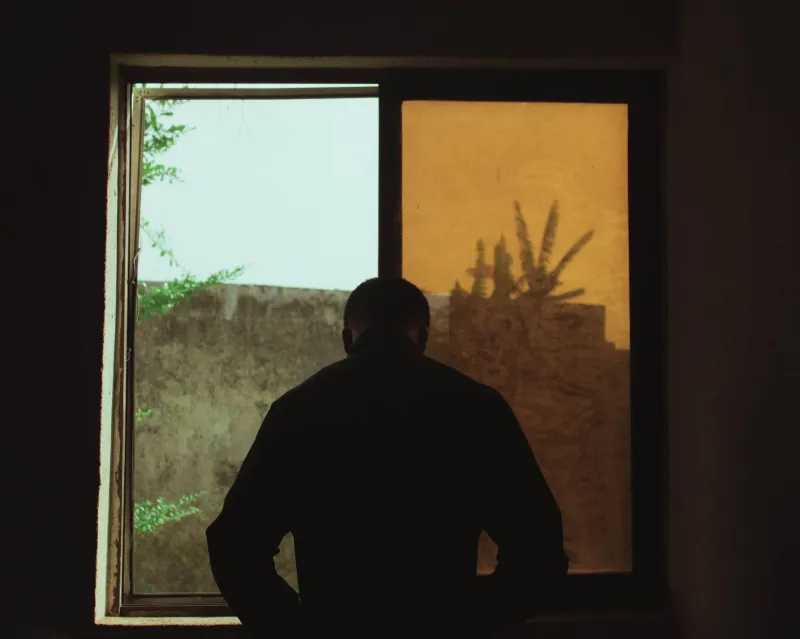
There is a particular kind of silence that descends after a story refuses to end properly. Not the silence of satisfaction, nor the quiet that follows catharsis. It is something closer to the feeling of standing in a room after someone has left it—the air still disturbed, the shape of their absence more present than any resolution could ever be.
For decades, American storytelling operated under a tacit covenant with its audience: suffering would be acknowledged, but it would ultimately be redeemed. Darkness would be permitted entry, but only if it agreed to leave by the final act. The redemptive arc was not merely a narrative preference—it was a cultural contract, one that promised viewers the dignity of meaning in exchange for their willingness to endure pain.
That contract is being quietly, deliberately torn apart.
The Rebellion Against Resolution
Contemporary filmmakers and showrunners have begun treating closure not as a gift to the audience but as a kind of dishonesty—a comforting fiction that distorts the actual texture of human experience. Films such as Aftersun and The Worst Person in the World have drawn critical admiration precisely because they refuse to explain themselves. Characters do not arrive at understanding. Relationships dissolve without ceremony. Grief does not transform into wisdom; it simply continues.
This is not nihilism, though it is frequently mistaken for it. The distinction matters enormously. Nihilism suggests that nothing means anything. What these works propose is something more nuanced and, in many ways, more devastating: that meaning exists, but it does not resolve. It accumulates. It contradicts itself. It refuses the neat container of a final scene.
Aftersun, Paul Mead's 2022 debut, is perhaps the most instructive example. The film follows a young girl on vacation with her father, reconstructed from memory by her adult self decades later. Nothing is explained. The father's interior life remains opaque, his pain visible only in fragments that the audience assembles without instruction. The film ends not with understanding but with the recognition that understanding was never available—and that this limitation is itself the truth the story was always trying to tell.
Why Audiences Are Choosing the Harder Thing
The cultural appetite for unresolved narratives did not emerge in a vacuum. It developed alongside a generation that came of age during events—September 11, the 2008 financial collapse, a global pandemic—that refused the grammar of resolution. These were not stories with third acts. They were ongoing conditions, wounds that did not close, traumas that continued to reshape daily life long after the initial rupture.
For an audience that has lived inside open-ended catastrophe, the tidy resolution of conventional narrative can feel not comforting but insulting. It implies that suffering has a finish line, that grief is a problem to be solved rather than a landscape to be inhabited. When a story refuses to offer that reassurance, it validates something audiences already know to be true: that the most significant losses of a life do not conclude. They simply change shape.
Television has been particularly receptive to this shift. Series such as Fleabag, Succession, and The Leftovers have each, in their own register, refused the audience the resolution it might have expected. The Leftovers, perhaps the most radical example, built its entire architecture around an event that is never explained and a grief that is never resolved. Its finale offers not answers but presence—a decision to remain in the discomfort rather than escape it.
The Artistic Honesty of the Incomplete
To withhold resolution is not a passive act. It requires considerable craft and a willingness to absorb the frustration of audiences conditioned to expect differently. The filmmaker or novelist who chooses ambiguity must construct that ambiguity with precision, ensuring that what is left unsaid carries as much weight as what is spoken.
This is where many attempts at deliberate incompleteness fail. Ambiguity that is simply the absence of thought reads as laziness. True narrative incompleteness is architectural—it is built, load-bearing, intentional. The silences in Aftersun are not empty; they are dense with implication. The unresolved relationships in Marriage Story do not drift into vagueness; they crystallize into something more painful than any clean conclusion could achieve.
Literature has long understood this principle. The American short story tradition—Carver, O'Connor, Cheever—built its reputation on the power of the withheld ending. These writers understood that the moment just before resolution, the moment when everything is poised and nothing has yet been decided, is often where the most essential truth lives. Contemporary film and television are rediscovering this instinct and applying it at scale.
The Risk of Mistaking Discomfort for Depth
It would be irresponsible to celebrate the unresolved ending without acknowledging the ways in which the form can be misused. Not every story that refuses closure is doing so in service of emotional honesty. Some narratives exploit ambiguity as a shield against criticism—if nothing is resolved, nothing can be judged as wrong. The deliberate withholding of resolution can become its own kind of manipulation, a way of appearing profound while avoiding the harder work of genuine emotional commitment.
The difference, ultimately, lies in whether the story has earned its incompleteness. Has it taken the audience somewhere real, even if that somewhere has no exit? Has it asked something of the viewer beyond passive endurance? The best unresolved narratives are not simply stories that stop before the ending. They are stories whose incompleteness is the ending—whose refusal to conclude constitutes the final, most honest statement the work has to make.
Living Inside the Open Wound
What the movement toward narrative ambiguity suggests, at its most fundamental level, is a shift in what audiences believe stories are for. The older compact—suffer now, receive meaning later—assumed that storytelling's primary function was consolation. The emerging compact asks something different: not that the story comfort the viewer, but that it tell the truth.
And the truth, as anyone who has lived through genuine loss will confirm, is that most wounds do not close cleanly. Most grief does not graduate into acceptance on any discernible schedule. Most significant relationships end not with the exchange of final, clarifying words but with the slow, bewildering recognition that the conversation is simply over—and that no one said what needed to be said.
The stories that refuse to pretend otherwise are not withholding comfort out of cruelty. They are offering something rarer and, in the long run, more sustaining: the recognition that the audience's own unresolved experiences are not failures of narrative. They are simply the shape that real life takes.
In the end, the unfinished story may be the most generous gesture a storyteller can make. It says: your confusion is not a problem to be solved. Your grief does not require a resolution to be legitimate. You are allowed to remain in the uncertainty, and you are not alone there.
That is not a comfortable message. But comfort, as Tragiko has always understood, was never really the point.