The Deaths That Were Never Supposed to Matter: How Storytellers Use Minor Characters to Break Us

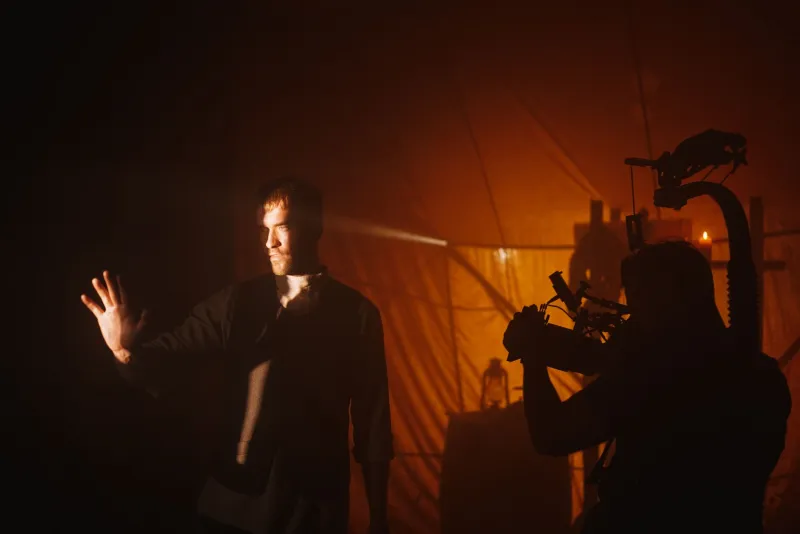
Photo: S!ddhraj, CC BY-SA 4.0, via Wikimedia Commons
Consider the moment in Avengers: Infinity War when Spider-Man, a secondary figure in a story populated by gods and soldiers, turns to dust in Tony Stark's arms. Consider Rue's friend Fezco in Euphoria, or Poussey Washington in Orange Is the New Black, or Hodor in Game of Thrones — a character whose entire arc was, in some sense, a single devastating word. These are not the stories' protagonists. They are not the characters the marketing materials centered. And yet their deaths have proven, in many cases, more emotionally corrosive than the deaths of the leads.
This is not an accident. It is craft — a refined, somewhat ruthless form of narrative engineering that contemporary storytellers have elevated to something approaching high art.
The Economics of Emotional Investment
To understand why minor character deaths land so heavily, it helps to understand the particular way audiences allocate emotional attention. Protagonists carry the narrative's full weight. Viewers are aware, on some level, that the story is about them — which means the audience's relationship to a lead character is always slightly mediated by structural awareness. We know the hero is in danger; the story's architecture tells us so. We brace.
Secondary characters exist in a different register. The audience invests in them obliquely, almost accidentally. A best friend introduced in the second episode. A mentor figure whose scenes are few but precise. A minor villain who shows the first tremor of conscience. These characters accumulate emotional weight through peripheral attention — through the way they illuminate the protagonist rather than through their own centrality. The audience loves them without fully accounting for that love.
When a writer removes such a character, they are not simply taking away a person. They are revealing the depth of an attachment the viewer did not know they had made.
The Redemption Arc Almost-Winner
Among the secondary character archetypes most frequently deployed as narrative weapons, none is more reliable — or more cruel — than the redemption arc that terminates one step from completion. This figure appears throughout contemporary film and television with striking regularity: the morally compromised character who has, at last, turned toward the light, only to be killed before the transformation can be fully realized.
Finn in The Force Awakens era, Jaime Lannister in Game of Thrones, even Gollum in Tolkien's original text — these are characters whose deaths (or near-deaths, or structural failures) carry a specific kind of devastation because they deny the audience the resolution it has been quietly promised. The redemption arc is a covenant between storyteller and viewer. Its violent interruption is a breach of that covenant, and the grief it produces is not purely for the character. It is grief for the story that was almost told.
Poussey Washington's death in Orange Is the New Black operates precisely this way. She was not a redemption arc figure in the traditional sense, but she represented something the show had spent seasons carefully constructing: the possibility of joy surviving inside a system designed to destroy it. Her death did not simply remove a character. It foreclosed a future the audience had allowed itself to want.
The Innocent Bystander and the Grammar of Injustice
A second archetype — the innocent bystander, the character who dies not because of anything they have done but because of where they are standing — produces a different but equally devastating effect. These deaths work through the grammar of injustice rather than the grammar of loss.
In No Country for Old Men, the Coen Brothers use this technique with cold precision. Characters who have committed no meaningful transgression, who have simply had the misfortune of proximity to Anton Chigurh, are extinguished without ceremony. The audience's distress is not purely emotional; it is philosophical. The deaths violate the implicit contract of narrative causality — the assumption that fictional deaths mean something, that they are earned by the story's internal logic.
When that contract is broken, the viewer is left with something more unsettling than grief: the sensation that the story is no longer safe, that no character's survival can be assumed, and that the world of the fiction operates by the same arbitrary cruelty as the real one. This is, of course, exactly what the most serious dark storytelling is designed to produce.
The Best Friend as Sacrificial Architecture
The best friend death — a staple of the genre — deserves particular examination because it functions differently from both the redemption arc and the innocent bystander. The best friend is defined almost entirely by their relationship to the protagonist. They exist, narratively, to reflect and amplify the lead character's qualities. When they die, the audience mourns not only the character but the version of the protagonist that character called forth.
This is why the death of Rue's closest relationships in Euphoria — or of Bubba in Forrest Gump, or of Mercutio in any production of Romeo and Juliet — carries such weight. The audience is not simply losing a secondary character. They are watching the protagonist lose a mirror. The world of the story becomes less legible after such a death, because one of the instruments through which the audience understood it is gone.
Contemporary writers have become increasingly sophisticated in their exploitation of this dynamic. The best friend is now frequently developed with enough independent interiority to be genuinely mournable on their own terms — which makes their structural function as a sacrifice all the more ethically complicated.
What These Deaths Reveal
The prevalence of secondary character deaths as a primary instrument of emotional devastation in contemporary storytelling reveals something important about the audience relationship to fiction. Viewers have, over decades of narrative consumption, developed a degree of immunity to protagonist deaths. The lead character's survival is so structurally expected that their death, when it occurs, often registers more as a plot event than as a genuine loss.
Minor character deaths bypass that immunity entirely. They arrive through the side door. The grief they produce is less anticipated and therefore less defended against — and it is frequently more durable. Many viewers who have long since processed the deaths of major characters can still articulate precisely what they felt when a particular secondary figure was taken from them.
That durability is the point. The most effective dark storytelling does not simply produce grief in the moment of viewing. It plants something that grows in the absence of the story — a residual awareness of loss that lingers in the spaces between episodes, between rewatches, between years.
The minor character, it turns out, was never minor at all. The writers knew this from the beginning. The audience learns it only after the damage is done.