Familiar Faces, Unfamiliar Dread: Why the Monsters We Recognize Are the Ones We Cannot Escape

Photo: ceridwen, CC BY-SA 2.0, via Wikimedia Commons
There is a particular kind of dread that no jump scare can manufacture. It arrives quietly, somewhere between the second and third act of a film you expected to frighten you in conventional ways, when you realize that you have been nodding along with the antagonist — not because their actions are defensible, but because their logic is legible. That is the horror contemporary cinema has been quietly perfecting, and it is considerably more difficult to shake than anything with claws.
For decades, American horror operated on a reliable contract: the threat came from outside. It arrived from space, from the grave, from the woods beyond the subdivision. Its otherness was the point. The monster's incomprehensibility was what made it terrifying, and the audience's survival — moral and physical — depended on maintaining a clear boundary between the ordinary world and whatever had breached it. That boundary has been dissolving for years, and the films that have emerged from its erosion represent some of the most genuinely unsettling storytelling the genre has ever produced.
The Logic That Shouldn't Make Sense — But Does
Consider what films like Hereditary, Midsommar, The Witch, and Get Out share beyond their critical acclaim and their horror genre classification. In each of them, the terror is not rooted in the inexplicable. It is rooted in the explicable taken to its conclusion. The antagonists — whether a grieving family fracturing under supernatural pressure, a remote community enforcing its own brutal covenant, a Puritan patriarch's fear weaponized as faith, or the comfortable face of systemic predation — all operate according to a discernible internal logic. They believe in something. They want something. They have reasons.
This is what separates psychological self-recognition horror from its predecessors. The shark in Jaws wants nothing that requires explanation. Michael Myers requires no motivation the film is willing to provide. Their power is precisely their blankness. But when a horror film presents a villain whose worldview the audience can reconstruct — whose cruelties follow from premises that are, in some distorted form, recognizable — it creates a fundamentally different experience. The viewer is no longer watching from outside the threat. They are being asked to account for their own proximity to it.
Banality as the Deepest Wound
Hannah Arendt's phrase — the banality of evil — was applied to bureaucratic complicity in atrocity, but it has found an unlikely second life in horror criticism, and not without reason. The films that disturb contemporary audiences most profoundly tend to locate their violence not in extraordinary malice but in ordinary failure: the failure of empathy, the failure of attention, the slow erosion of the moral imagination under the pressure of self-interest, fear, or ideology.
Hereditary is, at one level, a film about a demon. At another level, it is a film about what happens when grief goes unwitnessed and trauma is passed down without acknowledgment — a dynamic that requires no supernatural explanation whatsoever. The demon is almost beside the point. What haunts the film long after viewing is the image of a family that could not speak to one another about the things that mattered most, and the catastrophe that silence produced. American audiences recognize that silence. They have lived in its vicinity.
This is the mechanism by which contemporary horror achieves its most lasting effects. It uses genre conventions — the inherited curse, the isolated setting, the creeping revelation — to deliver something the straight drama cannot quite manage: the permission to feel the full weight of recognition without the defense mechanisms that realism triggers. Horror gives the audience a costume to wear while confronting what they would otherwise refuse to look at directly.
The Mirror and the Mask
What makes the self-recognition horror film culturally significant — and what makes it particularly resonant in the present American moment — is that it arrives at a time when the concept of moral clarity has become genuinely contested. The traditional horror villain derives power from consensus: everyone agrees this is the threat, this is the evil, this is what must be destroyed. Contemporary horror is increasingly populated by antagonists who would dispute that consensus, and who make their case compellingly enough that the audience cannot entirely dismiss it.
The community in Midsommar is monstrous. It is also, by its own accounting, coherent, communal, and honest in ways that the film's American protagonists — fractured, avoidant, emotionally dishonest — are not. The film does not endorse the commune's violence. But it refuses to let the audience dismiss it as simply other. It insists on the comparison. It makes the viewer do the uncomfortable arithmetic.
This is horror as cultural criticism, and it is more demanding than it appears. The films that execute this mode most successfully do not offer the reassurance of a clear outside threat. They offer instead the more difficult invitation to examine the inside — the assumptions, the avoidances, the small cruelties that accumulate into something larger — and to consider what, exactly, separates the audience from the antagonist they have been watching with such fascinated revulsion.
What We Carry Out of the Theater
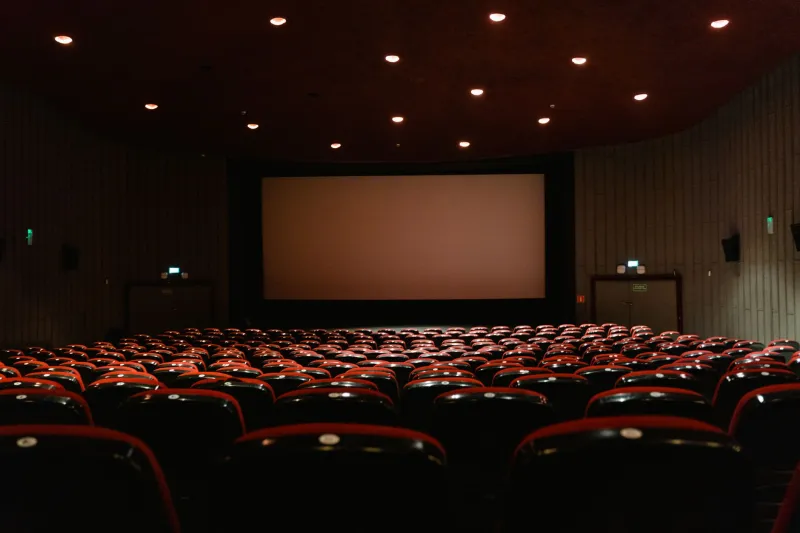
The traditional horror film ends when the monster is destroyed. The lights come up, the tension releases, and the audience exits having experienced fear as a temporary and ultimately pleasurable state. The self-recognition horror film offers no equivalent catharsis. The monster cannot be destroyed, because the monster is a tendency, a logic, a recognizable failure of the human character. It will be waiting in the parking lot.
This is, ultimately, why the genre's most effective recent entries linger in ways that supernatural horror rarely does. Get Out does not disturb its audience because the Armitage family is alien. It disturbs because they are familiar — because their particular form of predation is dressed in the language of progressivism, of appreciation, of love. The horror is not that such people exist. The horror is that they are indistinguishable, until they are not, from people we know and trust and perhaps resemble in ways we have not examined closely enough.
Contemporary horror has made a wager: that the most frightening thing it can show an audience is not a face they have never seen before, but a face they recognize. The genre is collecting on that wager with remarkable consistency. And the scream it produces is the one that stays caught in the throat long after the film has ended — the one we cannot quite release, because releasing it would require admitting what, exactly, we recognized.